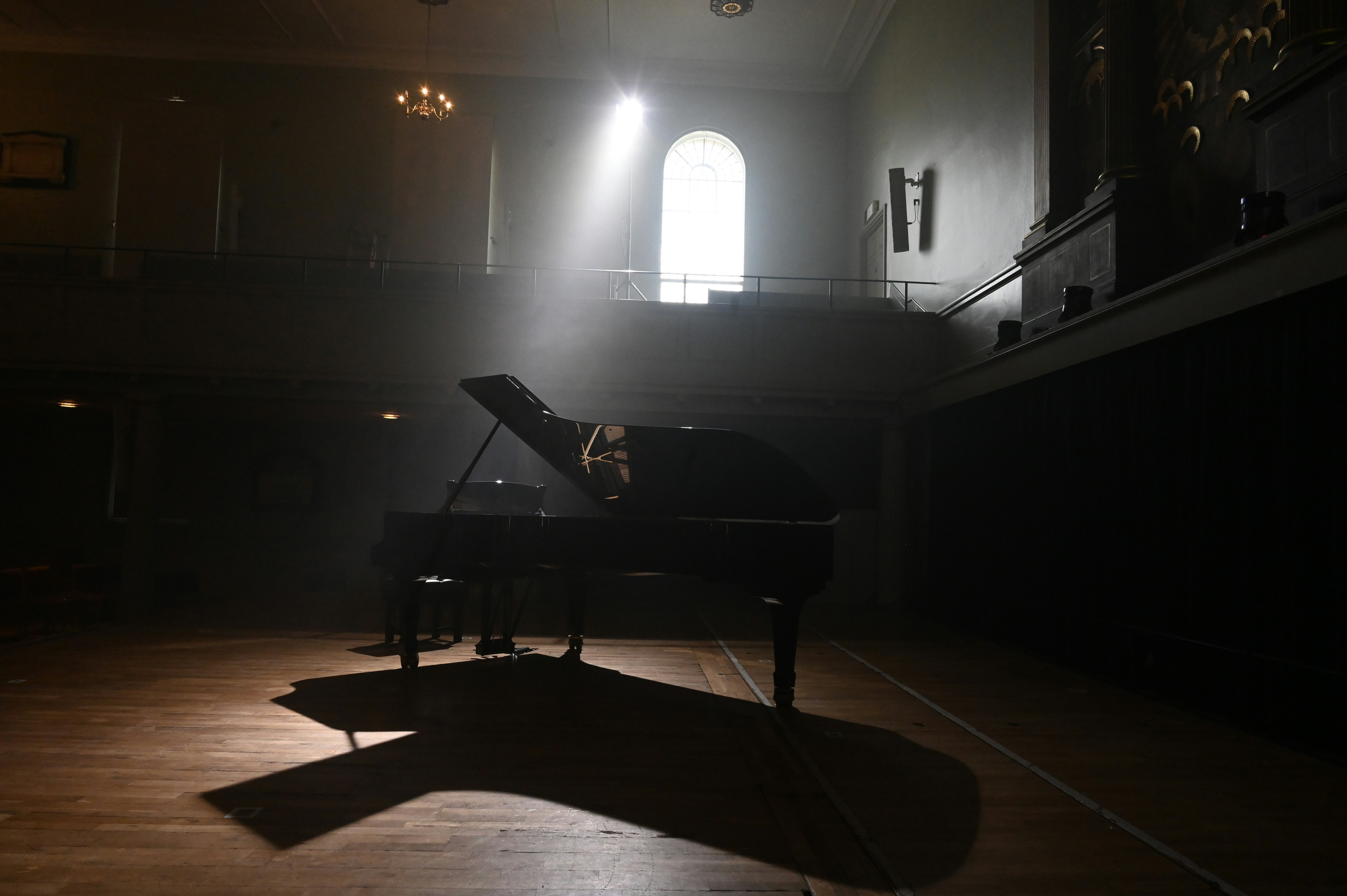
There is a particular kind of silence that falls in the moments before a concerto performance begins. The orchestra is seated. The conductor is poised. The audience is waiting. And you are sitting at the piano, about to play music you have practised hundreds of times, in conditions that are unlike anything the practice room has prepared you for.
Technical preparation brings you to this moment. Mental preparation determines what you do with it.
This article is about the mental side of concerto performance — what it demands, why it is different from solo playing, and the specific practices that help pianists perform at their best when it matters most.
Why the concerto is mentally different from solo performance
A solo recital is demanding. But the mental demands of a concerto performance are different in kind, not just degree. Several factors combine to create a psychological environment that most pianists have not encountered before — and that no amount of solo practice fully replicates.
You are not in control of everything. In a solo recital, you set the tempo, you decide when to begin, you control every musical decision from start to finish. In a concerto, you share musical leadership with a conductor and an orchestra. You must be responsive as well as expressive — listening and adjusting in real time, not just executing a pre-planned interpretation.
The waiting is unlike anything in solo playing. In many concertos, the orchestra plays for several minutes before the soloist enters. Sitting completely still, maintaining focus and physical readiness, while the orchestra plays around you — this is a specific mental challenge that requires its own preparation. The first entry after a long orchestral introduction is consistently one of the most psychologically demanding moments in any concerto performance.
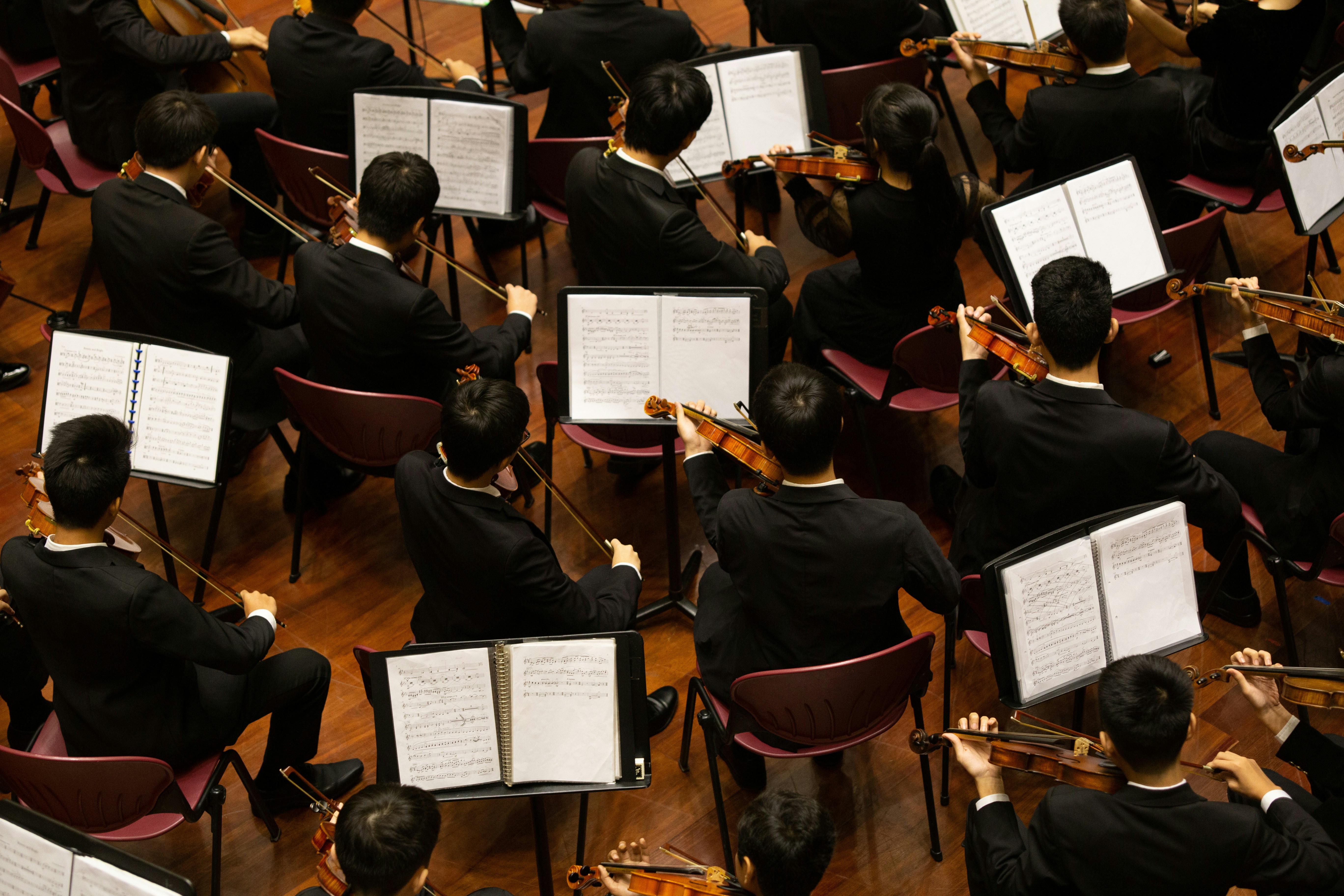
The acoustic is unfamiliar. Playing with a full orchestra in a concert hall sounds nothing like playing in a practice room. The instrument sounds different. The hall responds differently. The experience of hearing your own sound from inside a large acoustic, with an orchestra behind you, can be genuinely disorienting the first time — and disorientation is one of the most common causes of performance breakdown.
The stakes feel higher. Whether or not they are objectively higher, a concerto performance typically feels more significant than a solo recital. The orchestra, the conductor, the audience, the formal setting — all of these amplify the psychological weight of the occasion. That amplification can work for you or against you depending on how well prepared you are to manage it.
Technical security gives you the freedom to perform. Mental preparation gives you the ability to use that freedom under pressure.
What mental preparation actually means
Mental preparation is not a single technique or a pre-performance ritual. It is a set of practices developed over time that build the psychological resources a performer needs when the moment arrives. The most effective ones share a common quality — they are grounded in honest self-knowledge rather than wishful thinking.
Know your concerto away from the piano
One of the most reliable indicators of genuine preparation is the ability to hear the whole concerto in your head — every note, every phrase, every orchestral entry — without sitting at the piano. This internal hearing, sometimes called audiation, is not just a memory exercise. It is the foundation of musical confidence.
A pianist who can hear their concerto completely in their imagination is a pianist who knows what they intend to play before they touch the instrument. That intentionality — the gap between hearing and playing narrowing to almost nothing — is what separates a performance that feels controlled from one that feels like it is happening to you.
Spend 10 minutes each day away from the piano simply listening to your concerto in your head from beginning to end. Note where the internal hearing becomes vague or uncertain — those are the passages that need more work, regardless of how they feel under the fingers.
Practise performing, not just playing
There is a fundamental difference between practising and performing, and most musicians spend almost all of their time doing the former. In practice, you stop when something goes wrong, you repeat difficult passages, you analyse and adjust. In performance, you keep going — you commit to the musical line regardless of what happens, you make decisions in real time, you trust what you have prepared.
The mental mode required for performance needs to be practised just as deliberately as the technical content. This means running through the entire concerto — or entire movements — without stopping, without going back, exactly as you would in performance. Not to pretend mistakes did not happen, but to practise the mental skill of continuing through them.
Performing for an audience — even a small one — before the actual performance is invaluable. One person listening changes the psychological dynamic entirely. A teacher, a friend, a family member — anyone who creates the conditions of being heard. Record these run-throughs and listen back critically. The gap between how a performance feels from the inside and how it sounds from the outside is almost always larger than expected.
In the final weeks before a performance, do at least one full run-through of your concerto every day with no stops, no corrections, and if possible a small audience. Treat each one as a real performance. The mental muscle of committing and continuing develops only through repetition.
Manage your relationship with nerves
Performance anxiety is not an obstacle to be eliminated — it is a physiological response that, managed well, enhances performance. The physical symptoms of nerves — elevated heart rate, heightened alertness, increased adrenaline — are the same physiological state as excitement. The difference between the two is largely one of interpretation.
Pianists who manage nerves well tend to share a common approach: they expect them, they accept them, and they use them. They do not fight the physical sensations or try to suppress them. They channel the energy those sensations provide into the music — into the intensity of the first entry, the commitment of the big climaxes, the precision of the quiet moments.
What consistently makes nerves destructive rather than useful is not their presence but their focus. When a performer's attention turns inward — to how they are feeling, to whether they are playing well, to what the audience is thinking — performance quality drops immediately. The antidote is outward attention: to the music, to the sound, to the orchestra, to what you are trying to communicate.
Before performing, rather than trying to calm down, try reframing the physical sensations of nerves as readiness — your body preparing to perform at its best. The question to ask is not "how do I feel?" but "what does this phrase need from me?" Attention directed outward at the music is the most reliable antidote to performance anxiety.
Prepare specifically for the hard moments
Every concerto has moments that are psychologically harder than others — the first entry, a technically exposed passage, a long cadenza, the final pages when physical fatigue begins to accumulate. Identifying these moments in advance and preparing for them specifically is far more useful than generic mental preparation.
For each difficult moment, it helps to have a specific musical intention rather than a general instruction to "play well." Not "get through the cadenza" but "make the opening of the cadenza as quiet and suspended as possible." Not "don't rush the coda" but "feel the bass note on beat one of each bar." Specific musical intentions give the mind something concrete to focus on and leave less room for anxiety to fill.
The day of the performance
The morning of a performance is not the time for new practice or new decisions. Everything musical should be settled before this day. The practice on performance day — if you practise at all — should be gentle, confirmatory, and brief. Its purpose is to remind your hands of what they already know, not to learn anything new.
The hours before a performance are best spent doing whatever keeps you calm and connected to the music without depleting your energy. For some pianists that means quiet score study. For others it means complete rest from the music. Knowing which you are — and acting accordingly — is itself a form of mental preparation.
In the moments immediately before you walk on stage, a simple breath — slow, deliberate, complete — is one of the most physiologically effective things you can do. It activates the parasympathetic nervous system, lowers the heart rate slightly, and creates a moment of intentional presence before the performance begins. It is not a cure for nerves. It is a signal to yourself that you are ready.
After the performance
How a pianist processes a performance after it has happened is as important as how they prepare for it beforehand. The tendency to replay mistakes, to catastrophise imperfections, to measure the experience against an imaginary ideal version — these habits are deeply counterproductive and widely practised.
A more useful approach is to separate what was musical from what was technical, to identify specifically what you would do differently next time, and then to let it go. Every performance — including imperfect ones — teaches something that no amount of practice can. The pianist who learns from each performance without being defined by it is the one who improves most consistently over time.
The mental preparation described in this article is only fully tested in one place — on stage, with a real orchestra, in front of a real audience. The Piano Concerto Festival gives pianists exactly that opportunity: a full concerto performance with a professional orchestra in Paris, supported by private masterclasses with international faculty and a professional recording of the result.
For many participants, it is the first time they have performed their concerto under these conditions. For all of them, it is the experience that makes everything they have prepared real.